Social Studies and Research in Iran

Social Studies and Research in Iran


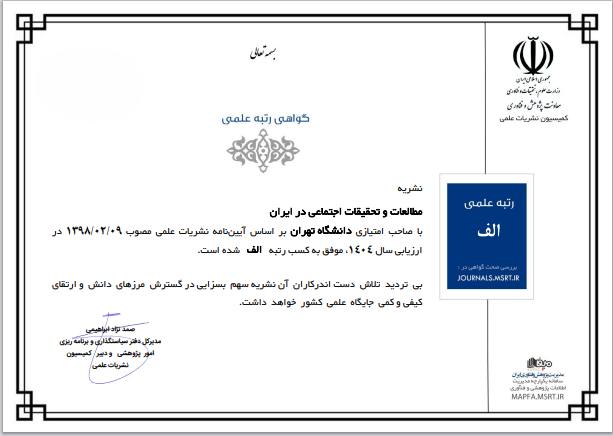
The journal of Social Studies and Research in Iran is an Open Access quarterly journal. This journal with the aim of publishing theoretical and experimental research in the field of social sciences in general and identifying the social problems of Iranian society and providing practical solutions for it in particular; It undertakes to publish research articles (derived from research projects and doctoral theses) and analytical articles. The received articles will be published after the initial approval of the editorial board and expert review. The journal follows the policies and guidelines of the Committee on Publication Ethics (COPE).


Publisher: University of Tehran Press

Publication sequence: Quarterly

Type of articles: Research and Review

Peer Review Policy: Double-blind peer-review

Initial review: Average 2 weeks.
Review and Acceptance time: Average 16 weeks

Publication type: Electronic

Plagiarism: Samim Noor, Hamtajo (Maximum similarity 15%)

Article Processing Charges: 20000000 Rials (Review fee 3000,000 Rials & Publication fee 17000,000 Rials)

COPE: The journal of Social Studies and Research in Iran  follows the policies and guidelines of the Committee on Publication Ethics (COPE) and abides by its Code of Conduct in dealing with potential cases of misconduct.
Copyright: Authors retain copyright, and the journal holds the right of first publication. 
Type of License: CC BY-NC 4.0 .

Open Access: There are no financial, legal, or technical barriers to access to articles in this journal


A memorandum of understanding was signed between The Quarterly of Social Studies and Research in Iran and the Iranian Sociological Association.


Guide to using artificial intelligence tools in research approved by the Ministry of Science, Research and Technology of the Islamic Republic of Iran


Current Issue: Volume 15, Issue 2, Spring 2026 

Intra-Ethnic Marriages in the Border Regions of Huraman-Lehun

Pages 103-122

10.22059/jisr.2026.408974.1703

Farshad Bahramzadeh, Hossein Daneshmehr, Habib Sabouri Khosroshahi

Publication Information

Indexing and Abstracting

Keywords Cloud

  • Iran
  • Social capital
  • Women
  • family
  • Grounded theory
  • gender
  • Religiosity
  • Identity
  • students
  • Thematic analysis
  • Representation
  • social trust
  • Tehran
  • University
  • participation
  • phenomenology
  • Development
  • Cultural Capital
  • cyberspace
  • social participation
  • Modernity
  • Attitude
  • Child Labor
  • trust
  • Religion
  • Media
  • Generation
  • Globalization
  • Childbearing
  • Social Health
  • divorce
  • Critical Ethnography
  • Gender
  • Social Exclusion
  • Governance
  • Education
  • body
  • Lifestyle
  • Migration
  • Socialization
  • social networks
  • Youth
  • Cinema
  • Violence
  • Ethnicity
  • Typology
  • Street Children
  • iranian cinema
  • crime
  • Student
  • Social support
  • Inequality
  • Life Satisfaction
  • Leisure Time
  • security
  • institutional trust
  • Social Inequality
  • Tehran city
  • Privatization
  • Adolescent
  • Motivation
  • power
  • Rational Choice
  • critical discourse analysis
  • Economic Capital
  • Bureaucracy
  • Qualitative Method
  • social class
  • habitus
  • Self-expression
  • climate change
  • agency
  • Social Indifference
  • Social Tolerance
  • Family changes
  • modernization
  • Narrative Analysis
  • Social Factors
  • quality of life
  • Lived Experience
  • Internet
  • Sanandaj
  • Loneliness
  • Conflict
  • National Identity
  • Mashhad
  • Tradition
  • youth
  • Clothing
  • belief
  • social development
  • NGOs
  • Mental Health
  • sociology
  • Market
  • political culture
  • political tolerance
  • Civil society
  • Kermanshah
  • Social Construction
  • Happiness
  • Organizational Culture
  • Child
  • discourse
  • Discourse analysis
  • International migration
  • Sexual relations
  • female students
  • time
  • Assimilation
  • cohabitation
  • "social capital"
  • exclusion
  • gender equality
  • resilience
  • hopelessness
  • historical sociology
  • Graduates
  • Systematic review
  • Social Justice
  • economic factors
  • Twitter
  • Instagram
  • risk
  • Mass Media
  • social control
  • Alienation
  • development
  • Religious identity
  • Development planning
  • Yazd city
  • Islamic Revolution
  • Ontology
  • social policy
  • Culture
  • beauty centers
  • Neoliberalism
  • ethnic
  • Multiculturalism
  • Demographic Changes
  • Individualism
  • Social Life
  • Social cohesion
  • Return to Self
  • cultural development
  • Semiotics
  • field
  • Prediction
  • Alcohol Use
  • politics
  • city
  • Religious Values
  • Social changes
  • Behavior
  • Narrative
  • Islam
  • political participation
  • objects
  • family values
  • Identification
  • Spirituality
  • Public participation
  • social demand
  • patriarchy
  • employment
  • tribalism
  • Energy Literacy
  • Development plans
  • daily life
  • Social hope
  • Social Sciences
  • Hamedan
  • Good Governance
  • Postmodern
  • Religious Tolerance
  • Cultural factors
  • Yazd
  • Tehran Municipality
  • Environmental knowledge
  • Self-management
  • Segregation
  • Ferdowsi University of Mashhad
  • fertility
  • Content analysis
  • Sociolinguistics
  • welfare
  • Economic Development
  • Tabriz
  • Employed Women
  • Social distance
  • interactions
  • Types of Capital
  • environmental attitude
  • Collective Memory
  • Energy
  • Diversity
  • Socioeconomic Status
  • National survey
  • Values and Attitudes
  • Informal sector